

Reparation of Crime
EXPERTISE / INTEGRITY / LASTING CHANGE

DE BEER INC

Important Notice: Strictly Appointment-Only
Please note that De Beer Incorporated operates strictly on a pre-scheduled, appointment-only basis. We do not accept walk-in clients.
To ensure the physical safety and security of both our clients and staff, all consultations are conducted remotely via Microsoft Teams.
For Inmates & Families: Our main contact number remains active for inmates utilizing prison call boxes during restricted institutional hours. Family members may also reach out via our online scheduling system below.
Standing, Authority, and Clearing Judicial Misconceptions
In South African sentencing and post-sentencing proceedings, the primary focus of the court must remain singular: the objective constitutional realities and rehabilitation potential of the applicant. Yet, persistent friction and confusion arise among many prosecutors and magistrates who incorrectly assume that correctional conversion applications under Section 276A(3) of the Criminal Procedure Act can only be initiated by the National Commissioner of the Department of Correctional Services (DCS).
Highlighting Parliamentary Insights (September 2026)
As formally emphasized during National Council of Provinces parliamentary oversight in September 2026 (Question No. 768), South Africa’s correctional facilities face critical capacity constraints with inmate populations surging toward 178,000 against roughly 101,000 official beds. Parliament underscored the legal frameworks available, yet across many courts, the true value of Section 276A remains misunderstood or underutilized.
Navigating Overburdened Systems and State Collaboration
Correctional facilities are heavily overworked, understaffed, and structurally incapable of single-handedly initiating every qualifying review from within. Expecting the Commissioner’s office to act as the sole gateway creates an administrative bottleneck. The law does not restrict applications solely to the Commissioner—other relevant parties and independent legal mechanisms are fully empowered to drive them.
However, navigating this requires immense, specialized labor. Because our courts and state parties operate under severe systemic backlogs, securing appropriate court dates that safely accommodate all state stakeholders alongside defense counsel is exceptionally challenging. Independent specialist intervention cuts through institutional inertia, managing these complex logistics and providing courts with the comprehensive, forensic-level mitigation data they require.
Our Core Specialization
Institutional Highlights:
- Criminal & Sentencing Mitigation
- Correctional Supervision (Section 276A)
- Forensic Risk Assessments
- Corporate Advisory & Risk Mitigation
- Restorative Justice & Reparation

Elite Academic Pedigree & Rigorous Forensic Labor
Backed by elite academic qualifications—including a Master’s degree obtained through Oxford University, alongside advanced degrees in psychology and extensive operational experience within the correctional system—De Beer Inc bridges penology, law, and behavioral science.
Each application represents weeks of specialized forensic labor tailored to the individual, cutting through institutional resistance and upholding the true goal of offender rehabilitation.
"Every individual possesses the capacity for a second chance—yet the responsibility to transform lies entirely within the individual. True rehabilitation is not passive; it is demonstrated through measurable accountability, structured restitution, and sustained behavioral change."


Executive Advisory & Fortune 500 Risk Mitigation
Protecting Enterprise Value, Leadership Continuity, and Cross-Border Compliance
In the modern global and domestic corporate landscape, legal exposure at the executive level threatens far more than individual liberty—it destabilizes entire enterprise ecosystems, shareholder confidence, and international governance frameworks.
De Beer Inc serves as a vital strategic asset for international firms, cross-border enterprises, and Fortune 500-aligned entities navigating complex white-collar risk, regulatory investigations, and post-sentencing exposures. By treating criminal mitigation and sentencing frameworks as an essential extension of corporate compliance and risk management, we deliver elite, audit-ready forensic assessments that protect organizational integrity, reduce regulatory penalties, and secure leadership stability.
For firms with a footprint abroad, our specialized methodologies bridge local South African jurisprudence with international corporate risk standards—ensuring that executive crises are handled with the rigorous analytical depth, discretion, and strategic oversight expected by global boards.

Executive Criminal Exposure

Regulatory & Compliance Risk

International Governance Support

Audience Benefits

For Victims
We understand the lasting impact of crime and ensure that victims' voices and needs are central to the justice process.

For Offenders
We provide a pathway to genuine accountability, rehabilitation and reduced recidivism.

For the Justice System
We help ease prison overcrowding, reduce taxpayer strain and support government reform initiatives.

For Society
A safer, more just society through restorative solutions that work for everyone.

The Economics of Justice, Accountability & True Reform
True justice is not measured solely by the months an offender spends behind closed doors at a staggering financial cost to South African taxpayers. With incarceration costs averaging over R480 per day per inmate—equating to roughly R14,400 per month and exceeding R175,000 per annum per individual (plus the heavy fiscal drain of awaiting-trial detention)—mass incarceration places an unsustainable financial overload on the public.
Furthermore, with critically overbearing inmate-to-officer ratios inside our correctional facilities, understaffed staff cannot adequately manage or rehabilitate the population, often forcing qualifying offenders into dangerous environments alongside hardened criminals.
Section 276A correctional supervision and independent pre-sentence mitigation actively support government initiatives to alleviate prison overcrowding and taxpayer strain. They are rigorous, demanding mechanisms requiring active compliance, strict community curfews, mandatory employment, and direct restorative accountability. For victims, this is not a "get out of jail free" card; it moves beyond passive, hyper-costly imprisonment toward tangible restitution and systemic closure—backed by specialists who understand the mechanics of true reform and align with South Africa’s constitutional mandates (such as S v Makwanyane).


The Power of a Second Chance
While the past shapes us, it does not define us. Through specialist mitigation and restorative justice, we help individuals rebuild their lives, families and communities — because true justice creates opportunities, not just consequences.
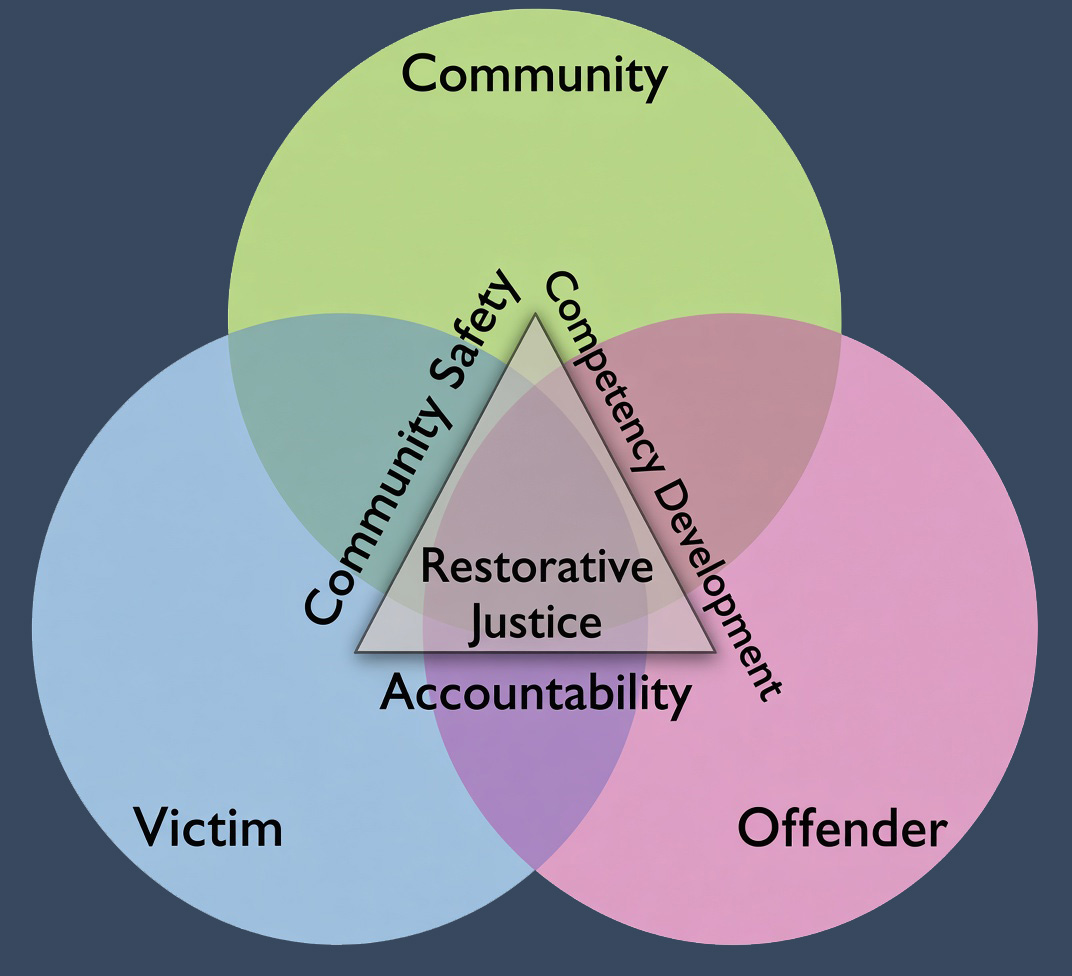
The Restorative Justice Triad – Balanced Procedural Equilibrium
Restorative justice finds the balance between accountability, rehabilitation and the needs of victims and society. It ensures that justice is not only served, but also restores dignity, rebuilds trust and creates long-term change.
The Victim
Acknowledge & Restore
- Acknowledgement
- Restitution
- Closure
The Offender.
Accountability & Rehabilitation
- Accountability
- Rehabilitation
- Reintegration
The Community.
Safety & Reintegration
- Safety
- Reduced Recidivism
- Stronger Society
Standing Authority & The Section 276A Reality
From judicial misconceptions to systemic backlogs, we navigate the complexities of Section 276A with authority, experience and elite academic expertise — bridging law, psychology and penology to deliver rigorous, forensic mitigation.

Nationwide Judicial Scope & Jurisdiction
Advisory and representation across South Africa's judicial landscape.

Apex Courts
Constitutional Court & SCA

High Courts
All 9 provincial divisions

District & Regional
300+ magistrates' & district courts
-
 How Restoration Shaped South Africa's History
- Believing in Mandela (1963): When Arthur Chaskalson defended Nelson Mandela during the Rivonia Trial, he fought against state vengeance to save Mandela from the death penalty. That single act secured the second chance that allowed Mandela to later lead South Africa through peaceful reconciliation.
- Believing in Chaskalson (1994): Upon his release and election as President, Nelson Mandela appointed Chaskalson as the first President of the Constitutional Court. Together, they transformed South Africa’s legal framework from punitive oppression into a system grounded in human dignity and social healing.
- A Paradigm Shift in Justice (1995): Presiding over the landmark S v Makwanyane ruling, Chaskalson abolished capital punishment, officially shifting South African law away from vengeance toward rehabilitation, accountability, and crime repair.
-
 What This Means for De Beer Inc. Today
At De Beer Inc., our restorative justice assessments and alternative sentencing advocacy (including Section 276A considerations) draw directly from this constitutional legacy.
History proves that when individuals are held genuinely accountable and granted a structured opportunity for redemption, the positive impact ripples far beyond the courtroom—it heals victims, transforms offenders, and restores communities.
-
 A Legacy of Justice, A Future of Hope
The partnership between Mandela and Chaskalson is more than a story of the past - it is the living foundation of our work today.
At De Beer Inc., we continue their legacy by championing restorative justice solutions that give people not just a second chance, but a real opportunity to build a better future.
A Principle Recognized Worldwide
Each of us is more than the worst thing we’ve ever done.
— Bryan Stevenson,
Founder of the Equal Justice Initiative
Restorative Justice is respect... If we pursue justice as respect, we will do justice restoratively.
— Dr. Howard Zehr,
Pioneer of Modern Restorative Justice
The vision that shaped South Africa’s constitutional democracy is shared by leading legal minds across the globe. From Nelson Mandela and Justice Arthur Chaskalson in South Africa to human rights champions and restorative justice pioneers in the United States, the consensus is clear: true justice restores, heals, and transforms.
At De Beer Inc., our practice bridges this rich local heritage with internationally recognized restorative methodologies—delivering rigorous, evidence-based assessments that give courts the confidence to choose restoration over destruction.

Our Constitutional Heritage
“
The rights to life and dignity are the most important of all human rights... This must be demonstrated by the State in everything that it does, including the way it punishes criminals.
— Justice Arthur Chaskalson, Founding President of the Constitutional Court
Our Mission & Commitment
De Beer Incorporated walks hand-in-hand with victims and offenders, coaching them through the restorative justice journey. We at De Beer Inc. draw on 28 years of experience, balancing second chances with victim needs and profound respect for the justice system. We are more than consultants—we are advocates for authentic, evidence-based crime repair.
To promote justice, rehabilitation, and reparation through expert restorative justice practices and criminological analysis.

28 years of experience within the justice and correctional system, providing expert guidance and support in navigating complex justice issues.
The Restorative Impact
By highlighting these benefits, restorative justice can be seen as a valuable approach to promoting healing, accountability, and rehabilitation.
For Victims.
Providing healing, closure, and empowerment through a process that centers their voice and needs.
- Healing and Closure: Restorative justice provides an opportunity for victims to confront their offenders, express their feelings, and receive apologies or restitution.
- Empowerment: Victims have a voice in the process and can participate in decision-making.
- Accountability: Offenders take responsibility for their actions, promoting a sense of accountability.
For Offenders.
Guiding them through genuine rehabilitation, building sincere remorse, and fostering a readiness for accountability.
- Rehabilitation: Restorative justice encourages offenders to take responsibility, make amends, and work towards rehabilitation.
- Personal Growth: Offenders can develop empathy, understanding, and a sense of accountability.
- Reintegration: Restorative justice can facilitate reintegration into society.
For the Community.
Promoting reconciliation, reducing recidivism, and fostering social responsibility.
- Reconciliation: Restorative justice promotes healing and reconciliation between victims, offenders, and the community.
- Community Building: It fosters a sense of community and social responsibility.
- Reduced Recidivism: By addressing underlying issues and promoting rehabilitation, restorative justice can reduce recidivism rates.
Additional Benefits.
A cost-effective, holistic, and compassionate approach to justice that addresses the root causes of harm.
- Cost-Effective: Restorative justice can reduce the financial burden on the justice system.
- Increased Satisfaction: Participants often report higher satisfaction rates with restorative justice processes.
- Holistic Approach: Restorative justice addresses the root causes of harm, promoting a more holistic approach to justice.

Address at the exhibition of the Department of Correctional Services (Parliament, 21 June 1996):
Reflecting on changes post-apartheid:
De Beer Incorporated
walks hand-in-hand with victims and offenders, guiding them patiently through the restorative justice journey toward genuine healing and resolution. The organisation draws on extensive experience within and outside the justice system, working with empathy and deep respect for all parties involved. A strong priority is placed on victims, ensuring they are given the time, space, and support needed to process their trauma so that their voices are fully heard and central to the process.
Offenders are supported to develop patience, sincere remorse, and a genuine readiness for accountability, with progression through the process only taking place once they are assessed as truly prepared. This balanced approach ensures that second chances are aligned with the needs of victims and the integrity of the justice system.
In cases handled by De Beer Incorporated, the organisation has consistently focused on achieving meaningful reparation, reduced recidivism, victim satisfaction and empowerment, successful offender reintegration, and long-term community healing. Its approach is highly personalised and hands-on, offering direct guidance throughout the restorative justice process and supporting meaningful turning points that can contribute to closure, hope, and transformation for all involved.
Informed by a deep understanding of the pressures faced by Judges, Magistrates, Prosecutors, Correctional Services, Investigators, and Police, this approach is centred on genuine accountability, meaningful reparation, and positive behavioural change. With over 28 years of experience in the South African context, De Beer Incorporated is committed to the belief that positive change is possible when appropriate guidance and opportunity are provided.
FAQ
How does De Beer Incorporated assist judicial systems, legal firms, and courts with pre-sentencing and post-sentencing mitigation?
We provide trial courts, defense counsel, and institutional bodies with objective forensic risk assessments across all stages of criminal proceedings. For pre-sentenced individuals, we structure court-admissible mitigation reports; for post-sentenced and currently incarcerated offenders, we evaluate candidate suitability for sentence reconsideration, statutory probation, or structured community supervision.
How does a Section 276A petition allow for sentence reconsideration to correctional supervision in South Africa?
Under Section 276A(2) of the Criminal Procedure Act 51 of 1977, a court may re-evaluate an incarcerated individual's sentence upon receiving an objective forensic and correctional assessment. De Beer Incorporated conducts multi-variable behavioral evaluations to present High Courts and sentencing authorities with structured, high-accountability community supervision plans that ensure public safety and promote long-term rehabilitation.
What role does restorative justice play in pre-sentencing proceedings?
Restorative pre-sentencing reports provide judicial officers with a comprehensive evaluation balancing victim restitution, offender accountability, and community safety (the Restorative Triad). This objective framework allows trial courts to consider viable non-custodial options or statutory probation before direct imprisonment is imposed.
How can qualifying foreign national inmates be evaluated for sentence reconsideration tied to statutory deportation?
Incarcerated foreign nationals who have served their required statutory minimum sentence can be evaluated for Section 276A sentence reconsideration in conjunction with the Immigration Act. De Beer Incorporated conducts rigorous behavioral vetting to present non-opposed petitions to prosecuting authorities—facilitating immediate deportation and a mandatory 10-year re-entry ban, thereby alleviating prison overcrowding while safeguarding national security.
What is the success rate of offenders released under De Beer Incorporated’s monitoring methodology?
Candidates who undergo our full behavioral vetting and monitoring framework have achieved a 100% compliance rate with court orders, resulting in zero reoffending across all completed supervisions.